


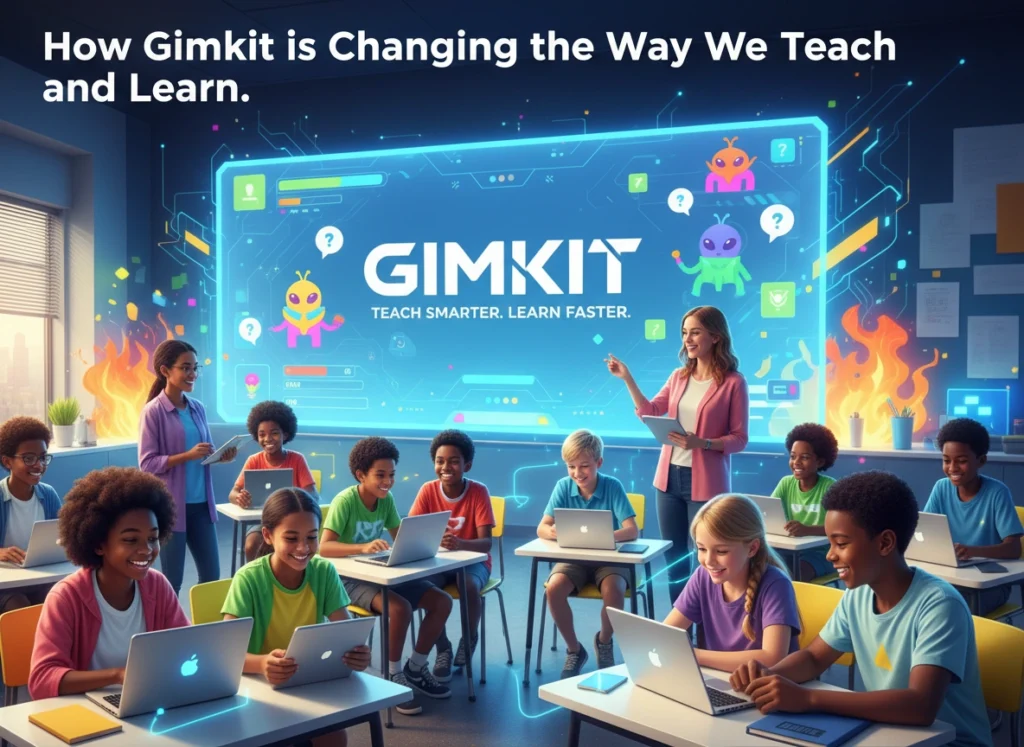

Traditional classroom review often involves worksheets, flashcards, or perhaps a spirited game of Jeopardy on the whiteboard. While these methods have their place, they rarely ignite the kind of competitive fervor usually reserved for video games. Enter Gimkit, a digital learning platform created by students, for students. What started as a high school project has rapidly evolved into a staple in classrooms worldwide, fundamentally altering the dynamics of student engagement and assessment.
This article explores the rise of Gimkit, analyzing its unique features, its profound impact on classroom culture, and how it differentiates itself in a crowded ed-tech landscape.
From Student Project to Global Phenomenon
The story of Gimkit is unique in the ed-tech space. Unlike many platforms developed by corporate teams or former educators, Gimkit was built by Josh Feinsilber while he was still a high school student. He wanted to create a review game that he and his classmates would actually want to play.
This “for students, by students” origin story is critical to understanding its success. The interface, the game mechanics, and the reward systems are all designed with the modern student’s psychology in mind. It doesn’t just gamify learning; it integrates learning into a genuine game environment.
The Core Mechanic: High Stakes and Strategy
At its heart, Gimkit is a live quiz learning game. Students answer questions on their own devices at their own pace. However, getting an answer right doesn’t just earn points; it earns virtual currency. This currency is the game-changer.
Students can use their earnings to buy upgrades and power-ups. Some upgrades increase the money earned per question, while others offer insurance against wrong answers. Power-ups can freeze other players’ screens or deduct money from the leaders. This introduces a layer of strategy absent in competitors like Kahoot! or Quizizz. It is not enough to simply know the answer; students must decide how to invest their earnings to maximize their score.
Innovative Features That Drive Engagement
Gimkit’s innovation lies in its variety of game modes. It moves beyond the standard “answer questions, get points” model to offer experiences that mimic popular video games.
Among Us Meets Education: “Trust No One”
One of the most popular modes is inspired by the social deduction game Among Us. In this mode, students are crewmates trying to complete tasks (answering questions), but there are impostors among them trying to sabotage the mission. This mode requires communication, critical thinking, and social deduction, all while reinforcing academic content.
The Floor is Lava and Other Team Modes
Cooperation is often as important as competition. In cooperative modes, the entire class must work together to keep the “lava” from rising or to build a collective structure. If the class stops answering questions correctly, the game ends for everyone. This fosters a sense of communal responsibility where stronger students are motivated to help their peers succeed.
KitCollab: Student-Generated Content
Gimkit empowers students to become the creators. With KitCollab, students can submit their own questions to the game before it starts. This feature transforms passive consumers of information into active participants in the assessment process. When students know their question might appear on the screen, their investment in the material deepens.
The Impact on Teaching
For educators, the shift to Gimkit represents more than just a fun Friday activity. It changes the pedagogical approach to review and formative assessment.
Data-Driven Instruction
Behind the colorful avatars and power-ups lies a robust data analytics engine. After every game, teachers receive a detailed report breaking down student performance. This data highlights which questions were missed most frequently, allowing teachers to identify gaps in understanding immediately. Instead of waiting for a graded quiz to see who is struggling, intervention can happen in real-time.
Reducing Assessment Anxiety
Standardized testing and high-stakes quizzes can cause significant anxiety for students. Gimkit alleviates this pressure by framing assessment as play. Because students can answer questions repeatedly within the game duration, a wrong answer isn’t a permanent failure; it’s a temporary setback that can be overcome with more correct answers. This resilience-building aspect is crucial for developing a growth mindset.
Customization and Flexibility
Teachers can customize games to fit any subject or grade level. Whether it is AP Calculus, foreign language vocabulary, or historical dates, the content is adaptable. Furthermore, the ability to assign Gimkit as homework (Assignments) allows students to practice at their own pace outside the classroom, reinforcing concepts without the pressure of a live timer.
The Impact on Learning
From the student perspective, Gimkit transforms the learning experience from passive reception to active engagement.
Engagement and Motivation
The most immediate impact is engagement. Walk into a classroom playing Gimkit, and the energy is palpable. Students are cheering, groaning over strategic missteps, and intensely focused on their screens. The immediate feedback loop—answer, earn money, buy upgrade—triggers the brain’s reward system, keeping motivation high throughout the session.
Strategic Thinking and Financial Literacy
Ideally, the strategy component of Gimkit introduces basic concepts of investment and risk management. Students quickly learn that saving money effectively yields lower returns than investing in upgrades that boost “money per question.” They must calculate whether it is better to sabotage a leader or bolster their own defenses. These micro-decisions foster critical thinking skills that extend beyond the subject matter being tested.
Repetition Without Boredom
Repetition is essential for memory retention, but it is often boring. Gimkit solves this by making repetition the mechanic for earning currency. To buy the best power-up, a student might need to answer 30 questions. They are willing to answer the same questions multiple times to achieve their in-game goals, leading to better retention of the material through spaced repetition.
Standing Out from the Crowd
The ed-tech market is saturated with quiz tools. Why does Gimkit stand out against giants like Kahoot! and Quizizz?
Kahoot! is excellent for teacher-led, synchronous review where everyone sees the same question at the same time. It builds a campfire moment but can leave slower readers behind.
Quizizz allows for student-paced review but lacks the deep gamification elements of an in-game economy.
Gimkit bridges these gaps. It is student-paced, meaning fast processors don’t have to wait, and slower processors aren’t rushed. However, the economy and power-ups keep the leaderboard dynamic. A student who struggles academically but understands the game strategy has a chance to win, leveling the playing field and boosting confidence for diverse learners.
Challenges and Considerations
While Gimkit is a powerful tool, it is not without its limitations. Educators must use it thoughtfully to maximize its benefits.
The Distraction Factor
The game mechanics that make Gimkit engaging can sometimes overshadow the content. Students might focus so heavily on using power-ups and “freezing” their friends that they rush through the questions without reading them carefully. This “spamming” of answers can lead to false positives in data, where a student guesses correctly purely by chance while trying to earn quick cash.
Accessibility and Equity
Like all digital tools, Gimkit relies on technology. It requires a device for every student and a stable internet connection. In underfunded schools or districts with a strict digital divide, equitable access to such platforms remains a hurdle.
Subscription Costs
While a free version of Gimkit exists, it is limited. The full suite of features, including unlimited game modes and advanced editing tools, requires a paid subscription (Gimkit Pro). For teachers paying out of pocket, this cost can be a barrier compared to fully free alternatives.
Best Practices for Implementation
To mitigate these challenges, teachers are adopting specific strategies:
- Setting Goals: Instead of just playing for the win, teachers set accuracy goals (e.g., “The class must achieve 85% accuracy to end the game”).
- Debriefing: Pausing the game or reviewing the data afterward ensures that the focus remains on learning. Discussing the “hardest question” of the game reinforces the academic content.
- Mixing Modes: Rotating between high-intensity competitive modes and collaborative modes keeps the experience fresh and prevents the classroom environment from becoming overly cutthroat.
Conclusion
Gimkit is more than just a digital flashcard app; it is a testament to the power of gamification when done correctly. By respecting students’ desire for agency, strategy, and fun, it has transformed the mundane task of review into a high-energy classroom event.
For teachers, it offers a window into student understanding masked as a game. For students, it offers a chance to engage with material without the fear of failure. As education continues to evolve in the digital age, tools like Gimkit that prioritize engagement and student experience will likely lead the charge.
The platform continues to update with new modes and features, suggesting that its influence on how we teach and learn is just beginning. Whether you are a veteran educator or new to the classroom, integrating Gimkit offers a fresh, dynamic way to connect with students and make learning stick.
Please visit the official site for more info.