

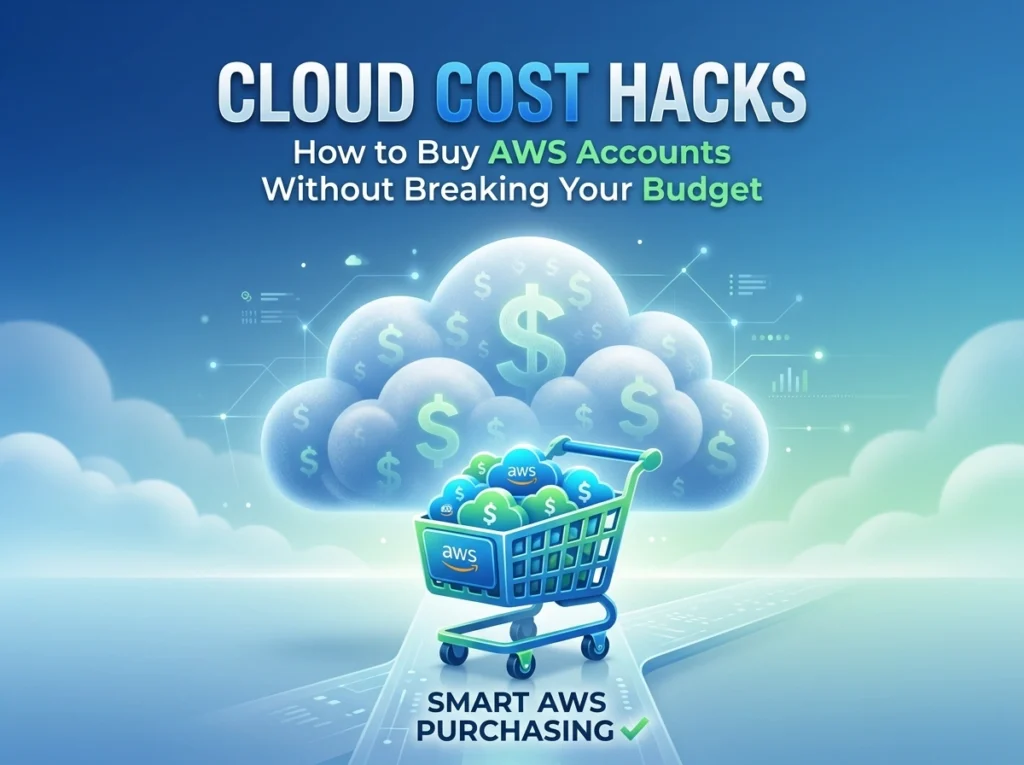

Cloud bills have a sneaky way of climbing. One month you’re testing a few services, and the next you’re staring at an invoice that doesn’t match your plan. If you run workloads on Amazon Web Services, you already know the pain. The good news? You can keep costs under control with the right mix of buying decisions, pricing knowledge, and monitoring habits.
This guide is for developers, startup founders, and IT teams who want to scale on AWS without burning through their budget. By the end, you’ll know how to buy AWS accounts wisely, choose the right pricing models, and use free tools to catch waste before it grows. Let’s get practical.
Why AWS Costs Get Out of Hand
AWS charges for almost everything you touch: compute, storage, data transfer, and dozens of managed services. The flexibility is a gift, but it’s also a trap. Resources spin up fast, and forgotten instances keep running long after a project ends.
Most overspending comes down to three habits:
- Leaving idle resources running
- Picking the wrong pricing model for the workload
- Ignoring cost reports until the bill arrives
Fixing these doesn’t require a finance degree. It requires a plan and a few smart choices upfront.
Buying AWS Accounts the Smart Way
Sometimes the fastest route to a working setup is buying a ready-made AWS account instead of building from zero. This appeals to agencies juggling multiple clients, developers who need verified accounts quickly, or teams that want extra accounts for testing and isolation.
What to Check Before You Buy
Not every seller is trustworthy, so do your homework. A solid account purchase should include:
- Verified billing details so you avoid sudden suspensions
- Clean usage history with no flagged activity
- Clear ownership transfer so you fully control the account
- Region access that matches where you plan to deploy
If you decide to go this route, work with a reputable provider. Services that let you Buy AWS Accounts can save setup time, but only when the accounts are properly verified and ready for production use.
When Buying Makes Sense (and When It Doesn’t)
Buying works well when you need accounts fast, want separate environments for clients, or need to bypass long verification delays. It’s a poor choice if you skip due diligence or buy from sellers without a track record. A cheap account that gets suspended costs more than it saves.
Understand AWS Pricing Models Before You Spend
You can’t cut costs you don’t understand. AWS uses several pricing models, and matching the right one to your workload is the single biggest lever you have.
On-Demand Pricing
You pay per hour or second with no long-term commitment. It’s flexible and perfect for short-term or unpredictable workloads. The downside? It’s the most expensive option for anything that runs around the clock.
Reserved Instances
Reserved Instances (RIs) let you commit to one or three years in exchange for discounts up to 72% compared to on-demand rates. If you run steady workloads, like a production database or a web server that never sleeps, RIs are a smart way to lock in savings.
There are two flavors worth knowing:
- Standard RIs offer the deepest discounts but less flexibility.
- Convertible RIs let you change instance types, trading some savings for adaptability.
Spot Instances
Spot Instances tap into AWS’s spare capacity at discounts up to 90%. The catch is that AWS can reclaim them with two minutes’ notice. They shine for fault-tolerant tasks like batch processing, data analysis, and CI/CD pipelines. Pair them with auto-scaling and your savings add up fast.
Savings Plans
Savings Plans offer flexible pricing in return for a commitment to a steady amount of compute usage (measured in dollars per hour). They cover more services than RIs and adjust automatically across instance families, making them a strong middle ground.
Squeeze Every Drop From the AWS Free Tier
New to AWS or testing a fresh idea? The Free Tier is your friend. It comes in three forms:
- Always free services like 1 million AWS Lambda requests per month
- 12-month free offers, including 750 hours of EC2 t2.micro usage
- Short-term trials for specific products
Use the Free Tier to prototype, learn, and test before committing real money. Just set a billing alert so you know the moment you cross into paid territory. Many surprise bills start with a Free Tier limit quietly slipping past.
Cost Monitoring Tools That Pay for Themselves
Visibility is everything. You can’t trim what you can’t see, so turn on the tools AWS gives you for free.
AWS Cost Explorer
Cost Explorer breaks down your spending by service, region, and time. Use it to spot trends, find your biggest cost drivers, and forecast next month’s bill. Reviewing it weekly takes ten minutes and catches problems early.
AWS Budgets
Set custom budgets and get alerts when spending or usage crosses a threshold. You can build budgets around cost, usage, or even Reserved Instance utilization. Think of it as a smoke detector for your invoice.
Trusted Advisor
Trusted Advisor scans your setup and flags idle resources, underused instances, and security gaps. Acting on its recommendations often reveals quick wins, like shutting down a forgotten test server that’s been running for months.
Third-Party Tools
Platforms like CloudHealth and Spot.io add deeper analytics and automation for larger teams. They’re worth it once your monthly spend is high enough that small percentage savings translate into real money.
Practical Cost-Cutting Habits
Tools and pricing models help, but daily habits seal the deal. Build these into your routine:
- Right-size your instances. Many teams pay for more compute than they use. Match instance size to actual demand.
- Schedule non-production resources. Turn off dev and staging environments nights and weekends.
- Delete unused storage. Old snapshots, unattached volumes, and stale S3 buckets quietly cost money.
- Use S3 storage classes. Move rarely accessed data to cheaper tiers like S3 Glacier.
- Watch data transfer fees. Moving data between regions adds up fast, so keep traffic local when you can.
Common Mistakes to Avoid
Even experienced teams trip over the same issues. Steer clear of these:
- Set-and-forget pricing. Workloads change, so revisit your RIs and Savings Plans regularly.
- Ignoring tags. Tag resources by project or team so you can trace spending and assign accountability.
- No cleanup process. Without a routine to remove unused resources, waste piles up silently.
- Buying accounts without vetting. A bargain account from an unverified source can vanish overnight.
Putting It All Together
Controlling AWS costs isn’t about one big move. It’s about layering smart choices: buying verified accounts from trusted sources, matching pricing models to workloads, exploiting the Free Tier, and watching your dashboards.
Here’s your quick-start checklist:
- Set billing alerts and a monthly budget today
- Audit running resources and shut down what you don’t need
- Match steady workloads to Reserved Instances or Savings Plans
- Send fault-tolerant jobs to Spot Instances
- Review Cost Explorer weekly
Start with one or two of these and build from there. Small, consistent adjustments beat a single panicked cleanup every time. Your cloud bill will thank you, and so will your budget.