


Innovation rarely happens in a vacuum. It usually starts as a quiet hum—a small idea born from frustration or foresight that gradually builds into a roar that changes an entire industry. Apkcort fits this narrative perfectly. What began as a modest attempt to streamline digital asset management has transformed into a powerhouse solution dominating the market.
This article explores the journey of Apkcort. We will trace its steps from a simple whiteboard concept to its current status as a market leader, examining the strategic decisions, technological breakthroughs, and resilience that defined its path.
Introduction: Redefining Industry Standards
Apkcort is more than just a software platform; it represents a paradigm shift in how businesses handle complex data integration and application packaging. In an era where digital agility separates the winners from the losers, Apkcort emerged as a critical tool for enterprises struggling to maintain speed without sacrificing security.
The platform’s significance lies in its ability to bridge the gap between development and operations. Before Apkcort, companies often relied on fragmented tools that created silos. Apkcort introduced a unified ecosystem that allowed for seamless application management. Today, it stands as a testament to what happens when user-centric design meets robust engineering. But to understand its dominance, we must look back at where it all began.
The Genesis: A Vision for Simplicity
The story of Apkcort starts in a small co-working space roughly a decade ago. The founders, a trio of systems architects, noticed a recurring problem. While mobile and desktop applications were evolving rapidly, the tools used to package, distribute, and manage these applications were stuck in the past. They were clunky, code-heavy, and prone to error.
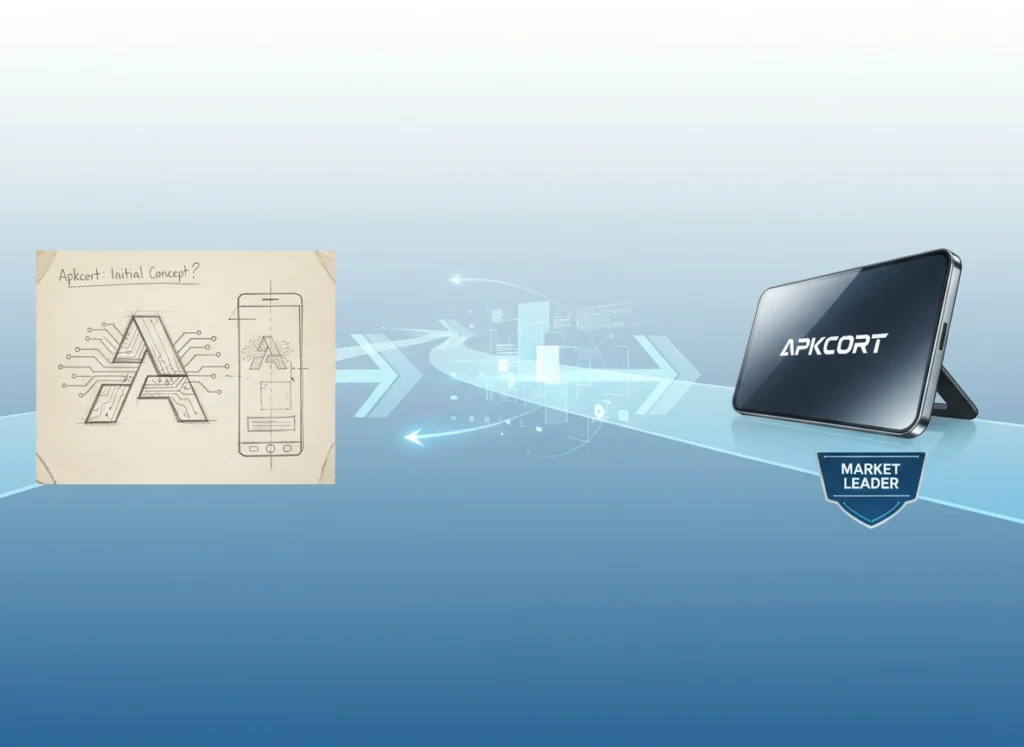
The initial concept for Apkcort was deceptively simple: create a universal wrapper that could stabilize application deployment across any environment. The vision was not to build the most feature-rich tool initially, but the most reliable one. They wanted to democratize application packaging, making it accessible not just to senior engineers but to IT generalists as well.
This “vision for simplicity” became the company’s north star. Early sketches of the interface show a relentless focus on minimalism. The founders believed that complexity was the enemy of efficiency. They aimed to reduce a process that typically took hours into a workflow that could be completed in minutes. This foundational philosophy would eventually become Apkcort’s biggest competitive advantage.
Navigating the Early Years: Milestones and Hurdles
Every startup faces the “valley of death,” and Apkcort was no exception. The first two years were defined by technical roadblocks and market skepticism.
The Compatibility Challenge
The first major hurdle was cross-platform compatibility. Early beta versions of Apkcort excelled in Android environments but struggled significantly with legacy Windows architectures. Critics were quick to label it a “niche mobile tool.” The team had to make a difficult decision: pivot to becoming a mobile-only specialist or double down on their universal vision.
They chose the latter. This decision required a complete rewrite of their core kernel, a risky move that consumed six months of runway. However, the result was the now-famous “Omni-Core” engine, which allowed Apkcort to handle legacy and modern applications with equal proficiency.
Breaking Into the Enterprise
Winning the first enterprise client was a significant milestone. Large corporations are notoriously risk-averse, and trusting a critical infrastructure component to a startup was a hard sell. The breakthrough came when a mid-sized logistics firm faced a critical deployment failure during the holiday season. Their existing tools failed, and in desperation, they piloted Apkcort.
The platform stabilized their system within four hours. This success story became the case study that opened doors to the Fortune 500. It proved that Apkcort wasn’t just a convenient tool—it was an enterprise-grade solution capable of handling high-pressure scenarios.
Strategic Innovation: The Engine of Growth
Apkcort did not become a market leader by sitting still. Once stability was achieved, the company shifted gears toward aggressive innovation. Several key strategies propelled them past established competitors.
The Move to AI-Assisted Packaging
While competitors were focused on manual scripting, Apkcort introduced automated, AI-assisted packaging. This feature analyzed an application’s code and predicted potential conflict points before deployment. It was a game-changer. IT teams could now proactively fix issues rather than reacting to support tickets after a rollout. This predictive capability reduced application downtime by an average of 40% for their clients.
Ecosystem Integration
Apkcort realized early on that they shouldn’t try to replace every tool in the stack. Instead, they focused on integration. They built robust APIs that allowed Apkcort to “talk” to popular project management tools, security scanners, and cloud storage providers. By positioning themselves as the central hub rather than a walled garden, they made themselves indispensable. It became harder for clients to leave because Apkcort was the glue holding their DevOps pipeline together.
The Community-First Approach
Unlike many B2B companies that kept their development closely guarded, Apkcort launched a developer community program. They allowed users to build custom plugins and share scripts. This crowdsourced innovation meant that Apkcort evolved faster than its internal team could have managed alone. If a new security protocol emerged, the community often had a patch or plugin ready within days.
Impact on the Industry and Customers
The ripple effect of Apkcort’s rise is evident across the tech landscape. They effectively raised the bar for what customers expect from application management software.
Democratizing DevOps
Perhaps the most profound impact has been the democratization of technical tasks. Previously, packaging an application for secure deployment required a specialist with years of experience. With Apkcort’s intuitive interface and automation, junior developers can manage these tasks effectively. This has allowed companies to allocate their senior talent to high-value creative work rather than routine maintenance.
Enhancing Security Posture
In an age of supply chain attacks, Apkcort became a security asset. Their implementation of “immutable packaging” meant that once an app was verified and sealed by Apkcort, it could not be tampered with without breaking the digital signature. This feature has become a standard requirement for many government and financial institutions, pushing the entire industry to adopt stricter security protocols.
tangible ROI for Clients
For customers, the impact is measured in ROI. A recent white paper analyzing Apkcort’s user base found that companies reduced their IT operational costs by 25% within the first year of adoption. The speed of deployment increased by 300%, allowing businesses to bring products to market faster. In the competitive digital economy, that speed is often the difference between relevance and obsolescence.
Future Prospects: What Lies Ahead?
As Apkcort looks to the future, the company shows no signs of slowing down. The roadmap suggests a shift toward “Self-Healing Infrastructure.” The vision is for Apkcort to not only deploy applications but to monitor them in real-time and automatically revert or patch them if anomalies are detected, without human intervention.
Furthermore, Apkcort is expanding its footprint into the Internet of Things (IoT). As smart devices proliferate in manufacturing and healthcare, the need for secure, reliable application updates on low-power devices is exploding. Apkcort’s lightweight architecture makes it perfectly positioned to lead this new frontier.
There are also talks of deeper integration with quantum computing security standards. As encryption standards evolve, Apkcort aims to be the first platform to offer “quantum-ready” application packaging, ensuring their clients are protected against future threats that don’t even exist yet.
Conclusion
The evolution of Apkcort from a whiteboard concept to a market leader is a masterclass in strategic resilience. They identified a genuine pain point, refused to compromise on their vision of simplicity, and innovated relentlessly.
For business leaders and tech professionals, the Apkcort story offers a clear lesson: success isn’t just about having a good product. It’s about listening to the market, being willing to pivot when necessary, and understanding that your product is only as good as the problem it solves for your customer.
As the digital landscape continues to fracture and accelerate, tools like Apkcort will remain essential. They are the invisible engines that keep our digital world running smoothly, proving that sometimes the most important software is the kind you rarely have to think about because it just works.
Key Takeaways
- Solve Real Problems: Apkcort succeeded because it addressed the specific pain of complex application packaging.
- Simplicity Wins: Prioritizing user experience and simplicity over feature bloat accelerated adoption.
- Resilience is Key: Overcoming early compatibility issues with the “Omni-Core” rewrite was a pivotal moment.
- Community Matters: Opening the platform to developer contributions accelerated innovation.
- Future-Proofing: Continual investment in AI and emerging tech keeps Apkcort ahead of the curve.
Please visit the official site for more info.